Tuvalu, one of the world’s smallest and least-visited nations, is a tropical gem in the Pacific Ocean. Known for its stunning coral atolls, unique traditions, and climate challenges, Tuvalu offers a fascinating mix of history, geography, and culture. In this Tuvalu Trivia collection, you’ll discover fun facts, surprising quiz questions, and educational tidbits about this island paradise. Let’s dive into some amazing Tuvalu Facts and Trivia Questions and Answers that highlight what makes this nation truly one of a kind!
Easy Tuvalu Trivia for Beginners 🏝️
Perfect for those new to Tuvalu – these basic questions cover geography and basic facts.
- What is the capital city of Tuvalu?
Funafuti. - What ocean is Tuvalu located in?
The Pacific Ocean. - How many main islands make up Tuvalu?
Nine (though only 8 are inhabited). - What is the main language spoken in Tuvalu?
Tuvaluan and English. - What is the currency of Tuvalu?
The Australian dollar and the Tuvaluan dollar. - What is the population of Tuvalu?
Approximately 11,000 people. - What is Tuvalu’s highest point above sea level?
Only about 4.5 meters (15 feet). - What is the main religion in Tuvalu?
Christianity (97% Protestant). - What year did Tuvalu gain independence?
1978 (from Britain). - What is the meaning of “Tuvalu”?
“Eight standing together” (referring to the eight inhabited islands).
Funny Tuvalu Trivia 😂
Discover the lighter side of Tuvaluan life with these amusing facts.
- What do Tuvaluans call their traditional dances?
Fatele (often involving energetic hip movements). - What unusual national sport exists in Tuvalu?
Kilikiti (a version of cricket with three-sided bats). - What is a popular local saying about the weather?
“When it rains, we swim to work!” - What do Tuvaluans joke about their land size?
“We don’t have traffic jams, just bicycle queues!” - What is the humorous nickname for Funafuti?
“The capital you can walk across in 20 minutes.” - How do Tuvaluans describe their internet domain?
“.tv – our most valuable piece of real estate!” - What’s the local joke about directions?
“If you get lost, just walk toward the ocean – you’ll find it everywhere!” - What do they say about their national airline?
“Our flight schedule depends on the tide!” - How do Tuvaluans describe their houses?
“Beachfront property for everyone!” - What’s the local wisdom about food?
“Why farm when the ocean provides a daily buffet?”
Tuvalu Trivia for Kids 👧👦
Simple, fun facts about Tuvalu for younger audiences.
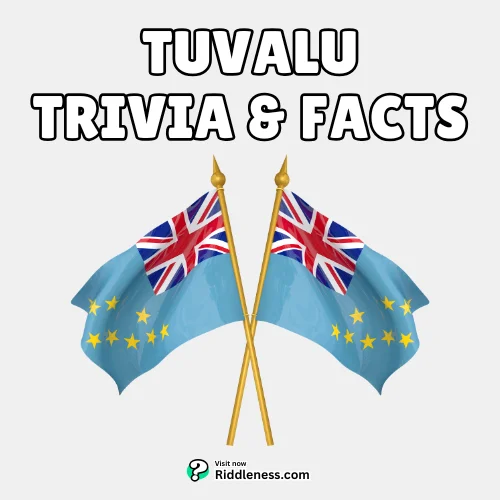
- What colors are on Tuvalu’s flag?
Blue, yellow, and the British Union Jack. - What animal is featured on Tuvalu’s coat of arms?
A sea turtle and a traditional maneapa (meeting house). - What do children in Tuvalu do for fun?
Swim, fish, and play kilikiti. - What is a traditional Tuvaluan toy?
Handmade outrigger canoe models. - What fruit grows on the islands?
Coconuts, breadfruit, and pandanus. - What is the national flower of Tuvalu?
Pulaka (swamp taro) blossom. - What sea creature do kids love to spot?
Dolphins and colorful reef fish. - What do families live in?
Thatch-roofed houses or concrete buildings. - What is school like in Tuvalu?
Children learn in both Tuvaluan and English. - What celebration do kids love most?
Te Aso Fiafia (Independence Day celebrations).
Hard Tuvalu Trivia 🧠
Challenge yourself with these detailed questions about Tuvalu’s history and culture.
- What was Tuvalu’s former colonial name?
The Ellice Islands. - Which European explorer first sighted Tuvalu?
Spanish explorer Álvaro de Mendaña in 1568. - What unique traditional governance system exists?
The Falekaupule (traditional island councils). - What is Tuvalu’s exclusive economic zone size?
Approximately 900,000 square kilometers. - Which world organization did Tuvalu join in 2000?
The United Nations. - What is the name of Tuvalu’s traditional money?
Not used anymore, but Te Faitasi was a traditional feather money. - Which country provides Tuvalu’s defense?
Australia under the bilateral security agreement. - What is the main source of renewable energy in Tuvalu?
Solar power (aiming for 100% renewable energy). - What percentage of Tuvalu’s budget comes from foreign aid?
*Approximately 60-70%.* - What is the name of Tuvalu’s national airline?
There is none – Fiji Airways serves the route from Suva.
Behind the Scenes: Tuvaluan Culture 🎭
Go inside the traditions and daily life of Tuvaluans.
- What is the importance of the maneapa?
Traditional meeting house for community decisions and events. - How do Tuvaluans traditionally navigate?
Using stars, waves, and bird movements. - What is a traditional Tuvaluan feast called?
A fakanofo (feast with community sharing). - What is the role of elders in Tuvaluan society?
Highly respected for wisdom and decision-making. - What is the significance of woven mats?
Used as currency in traditional exchanges and for special gifts. - How do Tuvaluans celebrate birthdays?
With community feasts and traditional dancing. - What is the importance of fishing in culture?
Central to diet, economy, and traditional skills. - How are disputes traditionally resolved?
Through community discussion in the maneapa. - What is the significance of the fale?
Traditional house design using local materials. - How is time viewed in Tuvalu?
“Island time” – relaxed and event-based rather than clock-based.
Tuvalu’s Geography and Climate 🗺️
Understand the unique landscape and environmental challenges.
- What type of islands make up Tuvalu?
Low-lying coral atolls and reef islands. - What is the total land area of Tuvalu?
Only 26 square kilometers (10 square miles). - What is the name of the large lagoon in Funafuti?
Te Namo (Funafuti Lagoon). - What climate does Tuvalu have?
Tropical rainforest climate with high humidity. - What natural disasters threaten Tuvalu?
Cyclones, storm surges, and sea-level rise. - What is king tide season?
February-April when highest tides occur. - What wildlife is unique to Tuvalu?
Various seabirds and marine life, but limited land mammals. - What plants are crucial to Tuvaluan survival?
Coconut palms, breadfruit, and pulaka (swamp taro). - What water challenges does Tuvalu face?
Saltwater intrusion into freshwater lenses. - What conservation efforts are underway?
Coastal protection and mangrove restoration.
Modern Challenges and Innovations 🌊
Examine Tuvalu’s contemporary issues and adaptations.
- What is Tuvalu’s main climate change concern?
Complete inundation from sea-level rise. - What digital nation project is Tuvalu developing?
Creating a digital version of the country to preserve culture. - What is the Tuvalu Trust Fund?
An international investment fund for economic stability. - How does Tuvalu generate government revenue?
.tv domain licensing, fishing licenses, and postage stamps. - What is the main export of Tuvalu?
Copra (dried coconut meat) and fish. - What health challenges does Tuvalu face?
High rates of diabetes and limited medical facilities. - What is the education system like?
Free primary education, but limited secondary and tertiary options. - How many people have emigrated from Tuvalu?
About 3,000 live abroad, mainly in New Zealand. - What is the Funafuti Conservation Area?
A marine protected area covering 33 square kilometers. - What international agreements has Tuvalu signed?
Paris Agreement and various UN climate conventions.
Cultural Contributions 🎨
Discover Tuvalu’s rich artistic and cultural heritage.
- What musical instruments are traditional?
Pate (wooden slit drums) and fala (woven mats used as percussion). - What is Tuvaluan dance known for?
Energetic hip movements and graceful hand gestures. - What craft traditions exist?
Weaving mats, baskets, and canoe sails from pandanus leaves. - What is traditional Tuvaluan clothing?
Women wear puletasi, men wear wrap-around skirts. - What cuisine is Tuvalu known for?
Palusami (coconut cream wrapped in taro leaves) and fresh seafood. - What sports are popular?
Volleyball, kilikiti, and soccer. - What is fatele singing?
Traditional group singing with complex harmonies. - What art forms are practiced?
Wood carving and shell jewelry making. - What is the Tuvaluan language related to?
Other Polynesian languages like Samoan and Tokelauan. - How are stories traditionally passed down?
Through oral history and chants called fakanau.
Economic Realities 💰
Understand Tuvalu’s unique economic situation.
- What is Tuvalu’s GDP?
Approximately $50 million USD. - What is the main employment sector?
Subsistence farming and fishing. - What percentage of food is imported?
*About 80-90% of modern diet is imported.* - How does the .tv domain generate revenue?
Licensing to media companies worldwide. - What is the average income in Tuvalu?
*About $3,000-$4,000 USD annually.* - How important are remittances?
Crucial – money sent from family members working abroad. - What development challenges exist?
Limited resources, isolation, and climate vulnerability. - What is the main transportation between islands?
Government-owned ships and small boats. - How many tourists visit annually?
*Only about 2,000-3,000 visitors.* - What is Tuvalu’s main import?
Food, fuel, and manufactured goods.
Climate Crisis and Future 🌍
Explore Tuvalu’s position on the front lines of climate change.
- How much has sea level risen around Tuvalu?
About 5mm per year (twice the global average). - What is the “sinking feeling” campaign?
International awareness campaign about sea-level rise. - Which countries offer climate migration to Tuvaluans?
Australia and New Zealand have special visa programs. - What is coastal erosion doing to the islands?
Shrinking land area and damaging infrastructure. - How has saltwater intrusion affected agriculture?
Damaged traditional pulaka (taro) pits. - What is the Tuvalu Coastal Adaptation Project?
A $39 million project funded by Green Climate Fund. - How are Tuvaluans adapting to climate change?
Building sea walls and raising house foundations. - What is the projected timeline for inundation?
*Some estimates suggest 50-100 years.* - What legal innovation is Tuvalu pursuing?
Preserving statehood even if territory is submerged. - What is Tuvalu’s message to the world?
“Save Tuvalu to save the world.”
Conclusion:
Tuvalu’s story is one of remarkable cultural resilience in the face of existential threats. This tiny nation represents both the rich diversity of Pacific Island cultures and the urgent reality of climate change. From its traditional navigation skills to its innovative digital nation project, Tuvalu continues to adapt while maintaining its unique identity. Its struggle for survival serves as a powerful reminder of our interconnected world and the importance of global environmental action.